AI Video Generator
 AI Image to Video
 AI Text to Video
 AI Image Generator
 AI Image to Image
 AI Text to Image
 AI Video Generator
 AI Image Effects
 Custom Kiss Generator
 AI Outfit Generator
 AI Dance Generator
 AI Video Extender
 AI Background Remover
'%3e%3cpath%20id='Star%20138'%20d='M25%203L25.8103%205.18973L28%206L25.8103%206.81027L25%209L24.1897%206.81027L22%206L24.1897%205.18973L25%203Z'%20fill='%232CB1FA'/%3e%3cpath%20id='Star%20140'%20d='M6%2024L6.54018%2025.4598L8%2026L6.54018%2026.5402L6%2028L5.45982%2026.5402L4%2026L5.45982%2025.4598L6%2024Z'%20fill='%232CB1FA'/%3e%3cpath%20id='Star%20139'%20d='M26.5%2010L26.9051%2011.0949L28%2011.5L26.9051%2011.9051L26.5%2013L26.0949%2011.9051L25%2011.5L26.0949%2011.0949L26.5%2010Z'%20fill='%232CB1FA'/%3e%3cpath%20id='Rectangle%2034625650'%20d='M14.8525%206.07666C18.3363%206.07674%2021.3822%208.42462%2022.2695%2011.7935L22.9141%2014.2407C23.3874%2016.0383%2025.0132%2017.2915%2026.8721%2017.2915H28.5254L27.7578%2018.7554L26.8223%2020.5396C26.1194%2021.8794%2024.9405%2022.8742%2023.5527%2023.3638L24.6221%2023.8989L22.833%2024.7925L21.3984%2025.5103C17.1972%2027.6109%2012.1194%2026.7374%208.86133%2023.356L8.49121%2023.1323C6.40465%2021.8717%205.45681%2019.3424%206.20117%2017.021L6.8291%2015.062C6.92852%2014.752%207.00215%2014.434%207.04883%2014.1118L7.26074%2012.6479C7.80696%208.8756%2011.0409%206.07666%2014.8525%206.07666Z'%20stroke='%232CB1FA'%20stroke-width='2'/%3e%3cpath%20id='Subtract'%20d='M13.0029%2013.0664C13.4146%2014.2856%2014.5579%2015.1063%2015.8447%2015.1064H19.1768C19.5643%2015.1065%2019.8789%2015.421%2019.8789%2015.8086V17.2734C19.8789%2019.7587%2017.8642%2021.7734%2015.3789%2021.7734C12.8936%2021.7734%2010.8789%2019.7587%2010.8789%2017.2734V15.8086C10.8789%2015.421%2011.1935%2015.1065%2011.5811%2015.1064H12.5664C11.8867%2014.0994%2011.8866%2012.7805%2012.5664%2011.7734L13.0029%2013.0664ZM13.9961%2018.2002C13.9961%2018.7525%2014.4438%2019.2002%2014.9961%2019.2002H15.9961C16.5484%2019.2002%2016.9961%2018.7525%2016.9961%2018.2002H13.9961Z'%20fill='%232CB1FA'/%3e%3c/g%3e%3c/g%3e%3c/svg%3e) AI Character Generator
AI Character Generator Language
  My Library
 Manage Subscription
 Refer & Earn
  Feedback
 Sign Out


 Bring your imagination to life with powerful Viyou AI tools.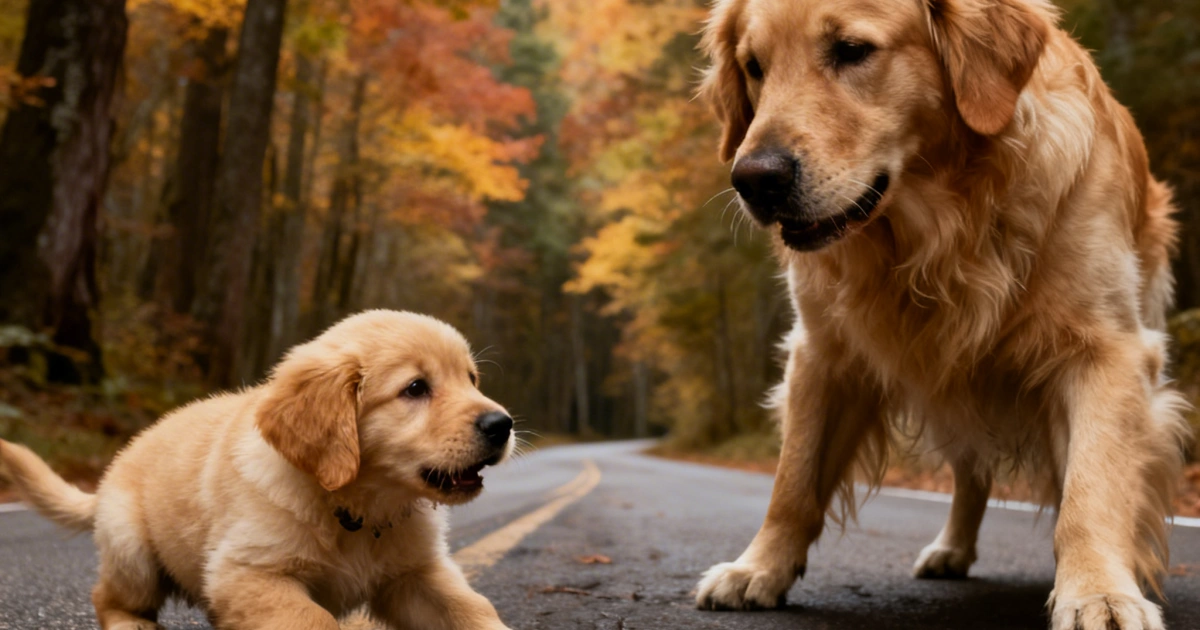
 Contents
AI animal story videos are exploding right now — especially emotional dog rescue videos and small animal story clips.
But most people fail when they try to copy them. Not because the tools are hard, but because they skip the most important part: story structure before generation.
In this guide, you’ll learn the exact step-by-step workflow that works, and then you’ll see two real examples (with the actual prompts used to create them).
The Exact Workflow Used to Create Viral AI Animal Story Videos
This is not a theory. This is the actual structure used by most viral animal story videos.
Instead of randomly generating images, follow this exact process.
Step 1 — Decide the Emotional Direction First (Before Writing Any Prompt)
This is the biggest difference between successful videos and failed ones.
Most beginners do this:
Generate a cute dog → try to think of a story later
What works better:
Decide the emotional direction first → then generate the image
The emotional directions that work best are:
- danger → rescue
- lost → found
- weak → protected
- scared → safe
If you skip this step, the video will feel random instead of emotional.
Step 2 — Create ONE Strong Scene (Not Multiple Weak Ones)
Another common mistake is generating too many images.
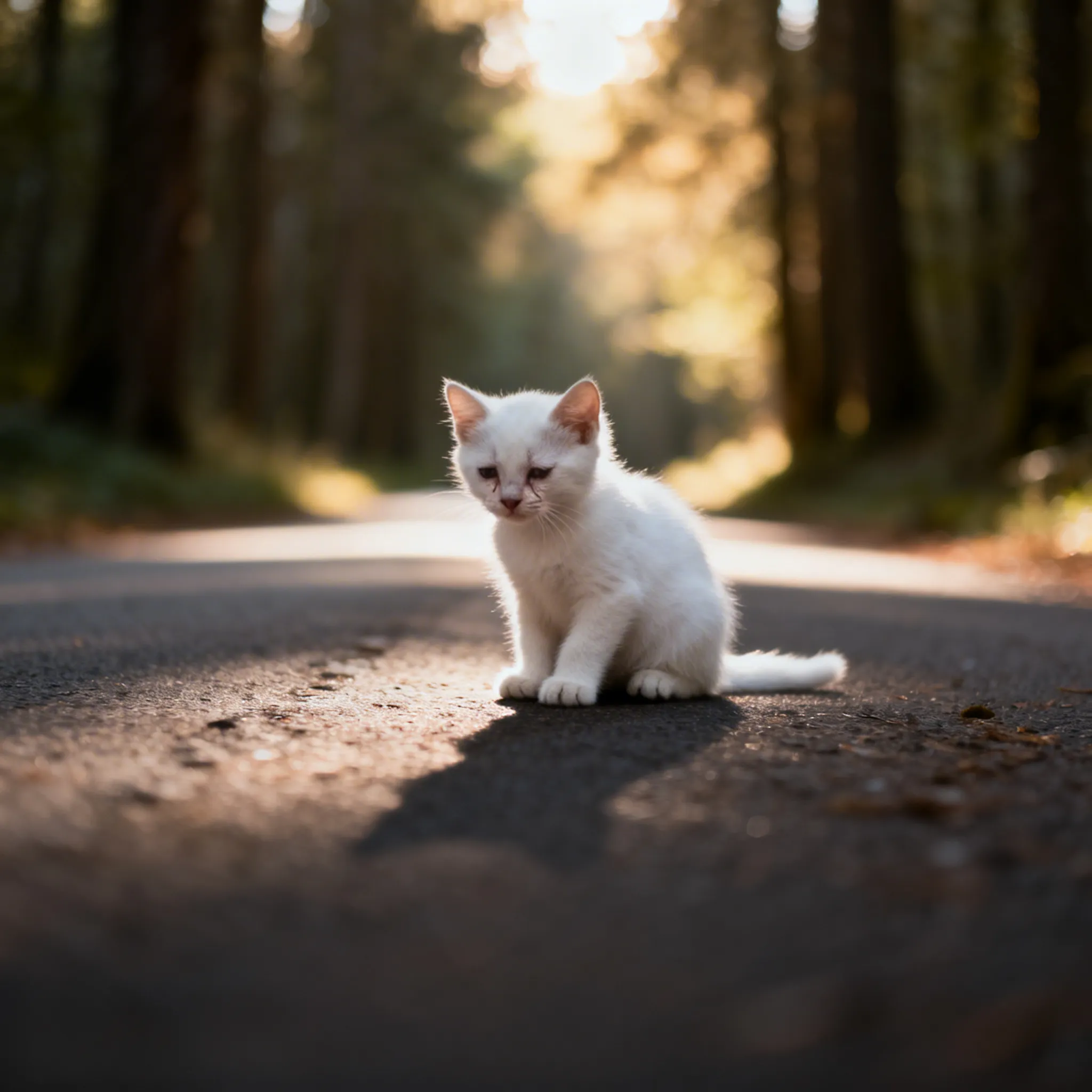
What works better is creating one very strong emotional scene that clearly shows the problem.
Example:
A small puppy in danger is much stronger than 5 random cute dog images.
Why this works:
Viewers need to understand the story instantly (within 1–2 seconds).
Step 3 — Write the Prompt Like a Movie Scene (Not Just a Description)
Most people write prompts like this:
a cute puppy on a road
That never goes viral.
Instead, write prompts like this:
- what is happening
- where it is happening
- what emotion the animal shows
- camera angle
- lighting
- movement
This makes the scene feel real instead of random.
Step 4 — Turn Emotion Into Motion (Not Action Into Motion)
When converting the image into a video, beginners often try to add too much movement.
What actually works:
- small motion
- emotional expression
- subtle realism
The goal is not “movement”. The goal is emotional tension.
Example 1 — Emotional Tension Video (The Puppy in Danger)
This example focuses on emotional tension only. No action. Just strong emotion.
Image Prompt Used
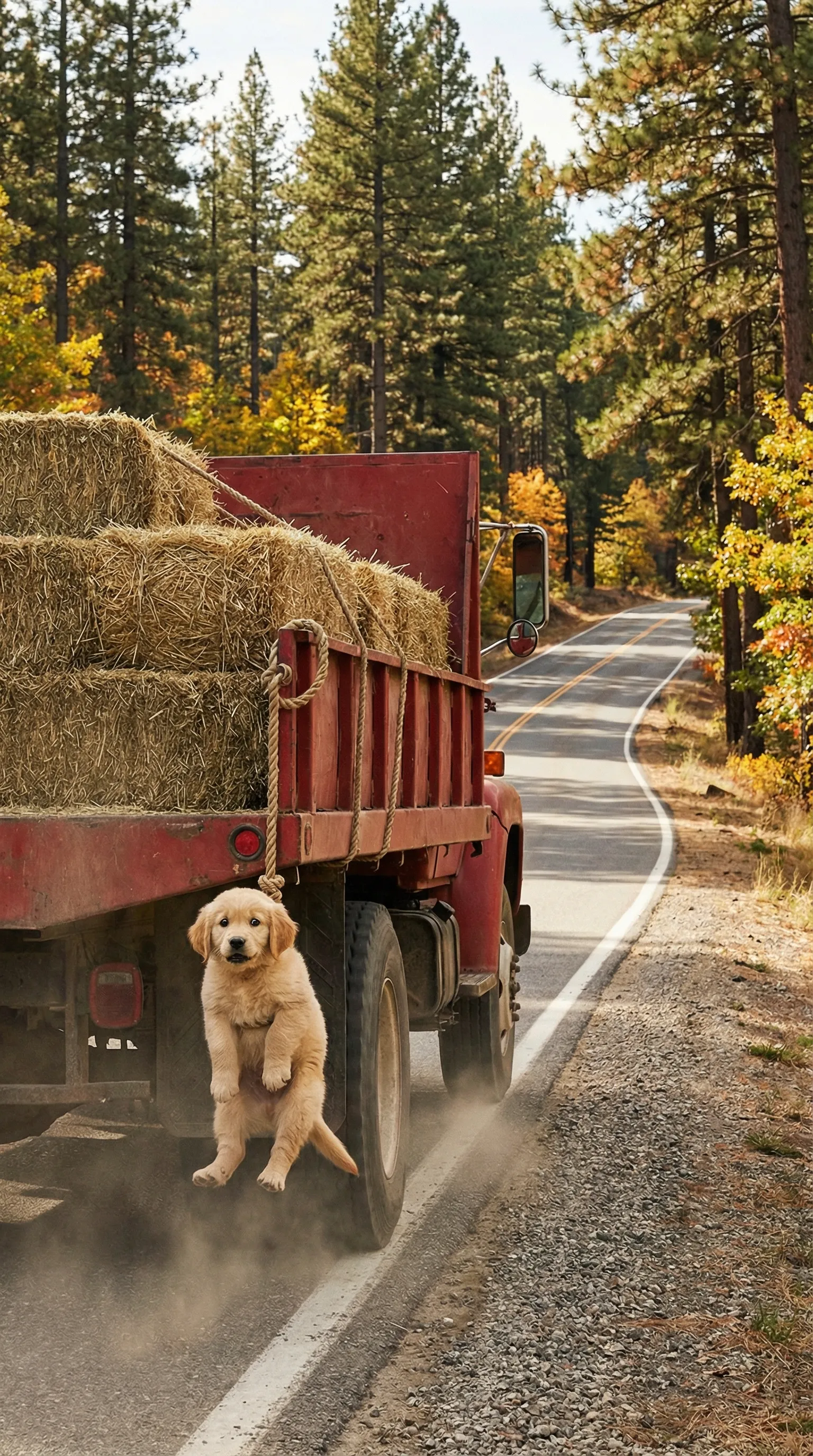
A small adorable golden retriever puppy is dangling helplessly in the air, suspended by a thick rope tied around its body, hanging off the back of a large red hay-transport flatbed truck driving on a scenic American forest highway surrounded by tall pine trees and autumn foliage. The puppy looks scared but alive, paws dangling, fluffy golden fur ruffled by wind, eyes wide. The truck is moving forward at moderate speed, dust kicking up from the dirt shoulder. Cinematic wide shot from behind and slightly low angle, dramatic tension, ultra-realistic fur details, natural daylight, American rural setting, 8K quality, photorealistic.
Why This Prompt Works
This prompt works because it includes:
- A clear danger situation
- A strong emotional subject (a puppy)
- A moving vehicle (creates tension automatically)
- Cinematic camera angle
- Realistic lighting
This makes the scene feel like part of a movie instead of a random AI image.
Video Prompt Used
The truck continued to drive, with the rumbling sound of the truck engine and the wind. The frightened expression on the puppy's face.
Why This Video Works
Because it does NOT try to do too much.
The truck moves slightly, the puppy looks scared, and the viewer immediately understands the story.
That simplicity is what makes this type of video powerful.
Example 2 — The Rescue Scene (Emotional Payoff)
Now we move from tension → emotion → action.
Image Prompt Used
A small adorable golden retriever puppy is dangling helplessly in the air, suspended by a thick rope tied around its body, hanging off the back of a large red hay-transport flatbed truck driving on a scenic American forest highway surrounded by tall pine trees and autumn foliage. The puppy looks scared but alive, paws dangling, fluffy golden fur ruffled by wind, eyes wide. The truck is moving forward at moderate speed, dust kicking up from the dirt shoulder. Cinematic wide shot from behind and slightly low angle, dramatic tension, ultra-realistic fur details, natural daylight, American rural setting, 8K quality, photorealistic.
Video Prompt Used
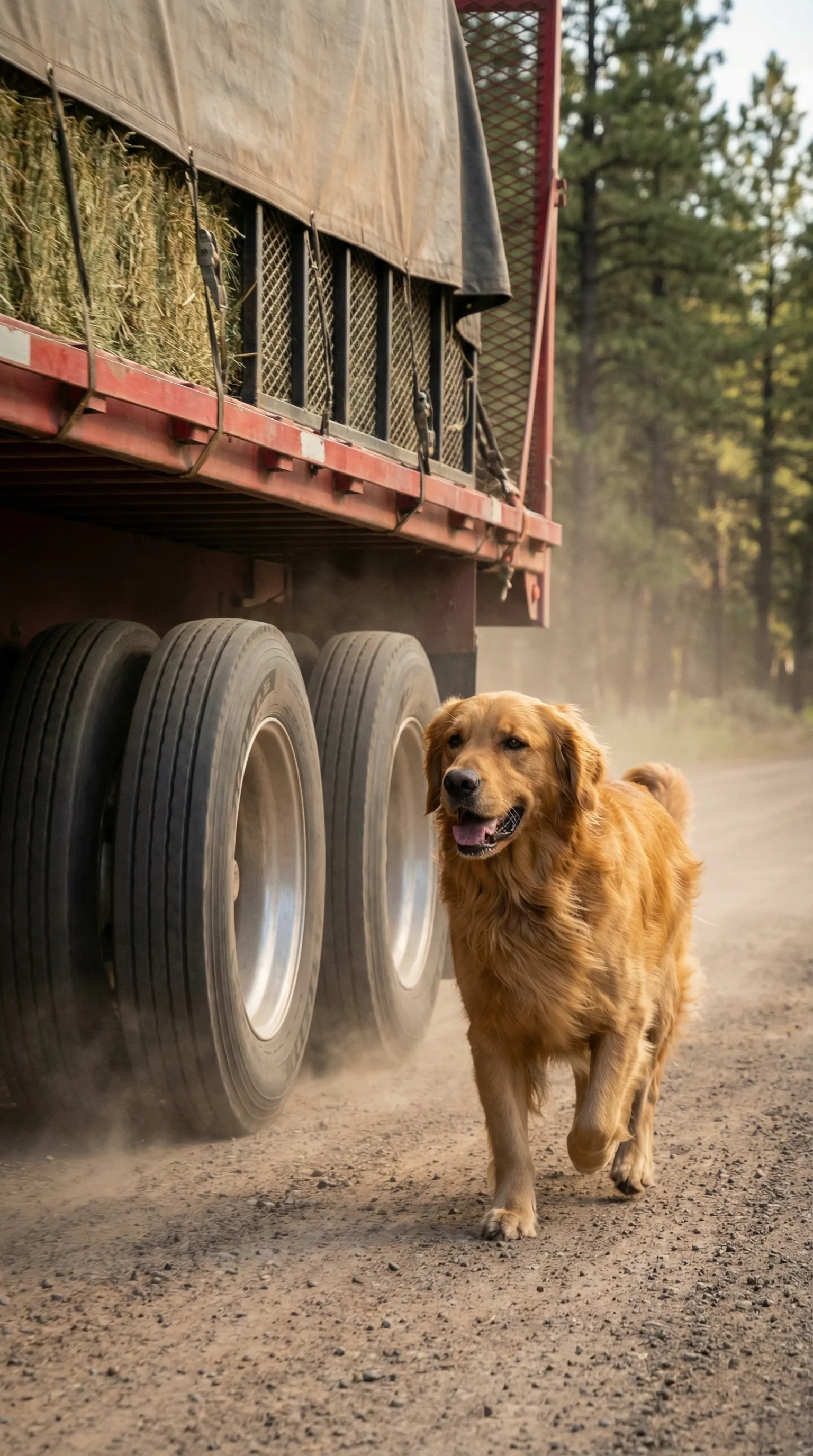
The adult golden retriever surges forward with incredible speed, overtakes the red hay truck on the forest highway, then boldly steps in front of it barking loudly, forcing the truck to brake hard and come to a full stop with screeching tires and dust cloud. The dog stands firm in the road, barking urgently at the cab, tail high, heroic posture. Dynamic side-to-front camera movement, slow-motion on the final brake and dust settle, realistic barking and tire skid sounds, heavy panting, truck engine winding down, forest ambiance, no music.
Why This Scene Works
Because it creates a clear emotional payoff:
Fear → Hope → Relief
That emotional transition is exactly what makes viewers watch until the end.
The Biggest Mistakes People Make (And Why Their Videos Don’t Work)
Most failed AI animal videos have one of these problems:
- Too many scenes
- No emotional structure
- Random cute animals but no story
- Too much movement, not enough emotion
- Prompts that describe appearance but not action
Avoiding these mistakes alone can improve results dramatically.
Final Thoughts
AI animal story videos are not about technology — they are about emotional storytelling in the shortest possible time.
Once you understand:
- emotional direction
- strong scene creation
- simple motion
- emotional payoff
you can create viral AI animal story videos much more consistently.
And the best part is: even beginners can do it in minutes once they understand the structure.