AI Video Generator
 AI Image to Video
 AI Text to Video
 AI Image Generator
 AI Image to Image
 AI Text to Image
 AI Video Generator
 AI Image Effects

 Bring your imagination to life with powerful Viyou AI tools.
You see two people type similar words. One gets art. One gets a mess. The difference isn't talent. It's knowing how to talk to the machine.
First, Look at Two Prompts That Actually Work
Before we get into theory, let's look at what a good prompt looks like. These aren't random word salads. Every single phrase is doing work.
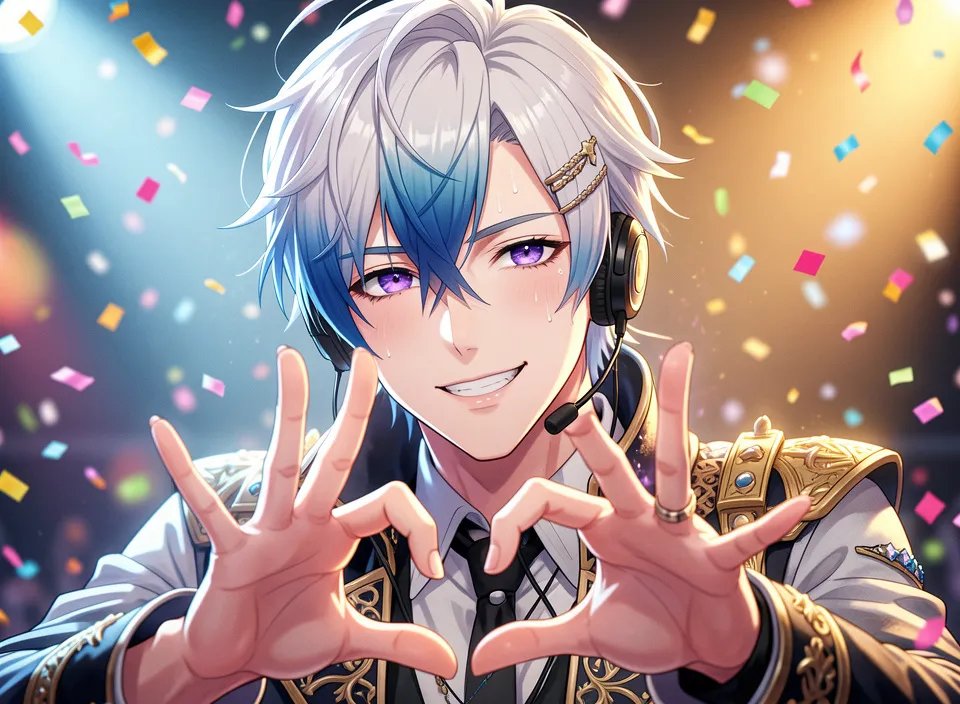
Example 1: Idol Stage Performance
A male idol with algae-green hair fading to blue at the tips, violet eyes, wearing an elaborate stage outfit and headset. He's making a heart sign with both hands toward the camera, perfect idol smile, confetti floating in the air, slight sweat on his forehead, slightly messy hair, a small hairpin visible. Eye-level angle, warm key light with cool edge lighting, strong highlights in hair and eyes, soft realistic skin texture, sharp facial details. Bright harmonious palette. Dynamic off-center composition, shallow depth of field focused on face. Canvas texture visible, cinematic render, dramatic glow effect. 8K quality, high detail.
Example 2: Hand-Drawn Sticker Style
Anime style, young male character with white cat-ear hairstyle, bright happy expression, multiple earrings, wearing white shirt with black bowtie and light blue coat with white cross pattern. Holding a black staff with black cat ornament on top and silver cross at bottom. On his right shoulder sits a small cat with heterochromatic eyes, smiling, white fur with light blue patches. White background with light blue and pink heart decorations. Handwritten text on left side. Center composition, clean color palette, harmonious.

See the difference? These prompts don't just say what to draw. They say how to draw it – the light, the texture, the tiny details that separate "AI-generated" from "I want this framed."
The Five Core Elements You Need Every Time
After reverse-engineering hundreds of successful prompts, here's what matters. Any good prompt can be broken into these five pieces.
First, your subject and content. This tells the AI what to draw. Character features, clothing, props, pose, expression. Be specific. "Algae-green hair fading to blue at the tips" works. "Cool hair" doesn't.
Second, composition and angle. This tells the AI how to frame it. Shot type, angle,aspect ratio. "Eye-level angle, dynamic off-center composition, shallow depth of field focused on face, 16:9" gives clear direction. "A person standing there" leaves too much to chance.
Third, art style. This sets the aesthetic direction. Painting style, genre, artist references. "CG illustration with thick paint style, cinematic render" creates a specific feel. Just "anime style" is too broad.
Fourth, lighting and color. This controls the mood. Light source, color temperature, special effects. "Warm key light with cool edge lighting, strong highlights in hair and eyes" tells a story about the scene. "Good lighting" says nothing.
Fifth, quality and details. This ensures it doesn't look cheap. Resolution, rendering precision, texture, negative prompts. "8K quality, canvas texture visible, high detail render" pushes for something polished.
Put them together and you get a formula that works every time: subject first, then composition, then style, then lighting, then quality. Add weights where something really matters. Always include negative prompts. Never forget your technical parameters.
The Tricks That Make It Do What You Want
Weight control changes everything. Put (keyword:1.2) next to anything that really matters. (algae-green hair fading to blue:1.5) makes sure that specific color treatment doesn't get lost in the noise.
Negative prompts save your images. Always, always include what you don't want. No deformed hands, no extra fingers, no bad anatomy, no low quality, no blurry, no watermark, no text. This is non-negotiable.
Order matters more than you think. The first twenty words carry the most weight. Lead with your most important subject. Push less critical details toward the back.
Different styles like different settings. For cel-shaded or flat color work, try Euler a with twenty to twenty-five steps and a CFG around seven to nine. For thick paint or realistic work, DPM++ 2M Karras with twenty-five to thirty steps and a CFG from seven to eleven works better. For cute chibi stuff, Euler a with twenty to twenty-five steps and a lower CFG around six to eight keeps things soft.
What's Coming Next
Now that you have the formula, you can apply it to anything. Here's what we'll break down in the next six guides, each with ready-to-copy prompts you can use immediately.
Part two covers Japanese anime styles. You'll learn the difference between cel-shaded flat coloring and the dramatic lighting of Shinkai-inspired work. You'll know exactly which keywords create hard outlines versus soft atmospheric glow.
Part three dives into thick paint and realistic rendering. Volume, visible brush strokes, skin texture that looks touchable – this is where illustrations stop looking like computer graphics and start looking like paintings.
Part four explores Chinese aesthetics. Traditional meets modern, ink wash techniques mixed with contemporary fashion, Guochao style that blends cultural heritage with streetwear energy.
Part five builds worlds for sci-fi and fantasy. Cyberpunk needs different keywords than wasteland. Xianxia needs different lighting than straight fantasy. You'll learn the vocabulary that builds complete universes.
Part six keeps it soft and healing. Watercolor textures, pastel palettes, cozy moments that feel like a warm drink on a cold day. This is for when you want images that comfort.
Part seven goes full cute with chibi. Two-head proportions versus four-head-memes-ready designs that work for stickers and profile pictures. The secret sauce for making anything adorable.
One Last Thing
Don't expect to nail it on the first try. I've generated hundreds of unusable images. The only way to get good is to see a great image, reverse-engineer the prompt, figure out why it worked, and steal those moves for your own work.
Open your Viyou AI. Write your first stupidly detailed prompt. Start with part two if you're into anime, or jump to part seven if you just want something cute.
The machine is waiting.